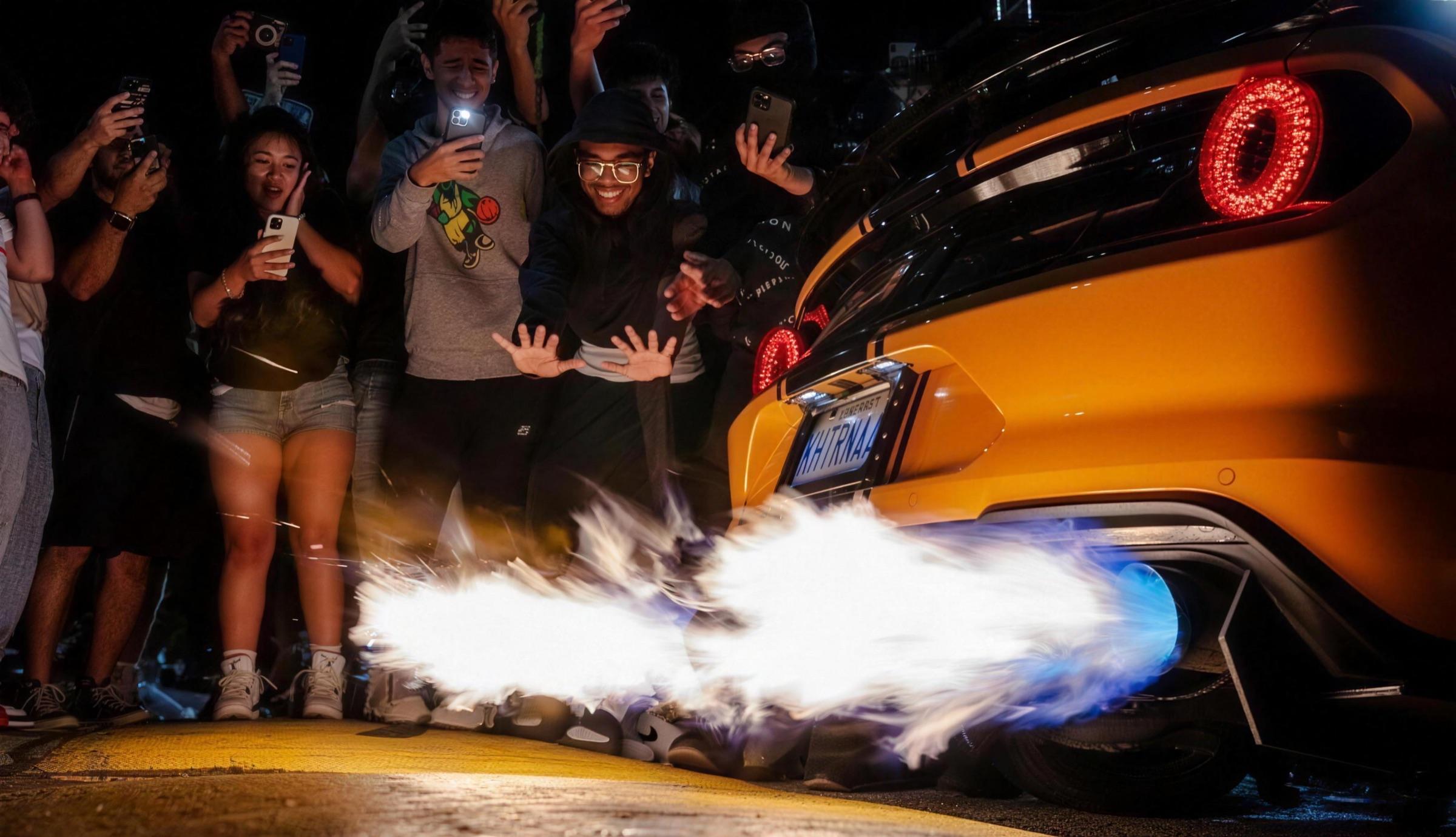
Flame kit unlocked
How VYPR's flame kits make fire on purpose, why they need a high-flow exhaust and a Stage 2 tune, and which cars are easy or hard to do.
· 2 min read · VYPR Performance, North York
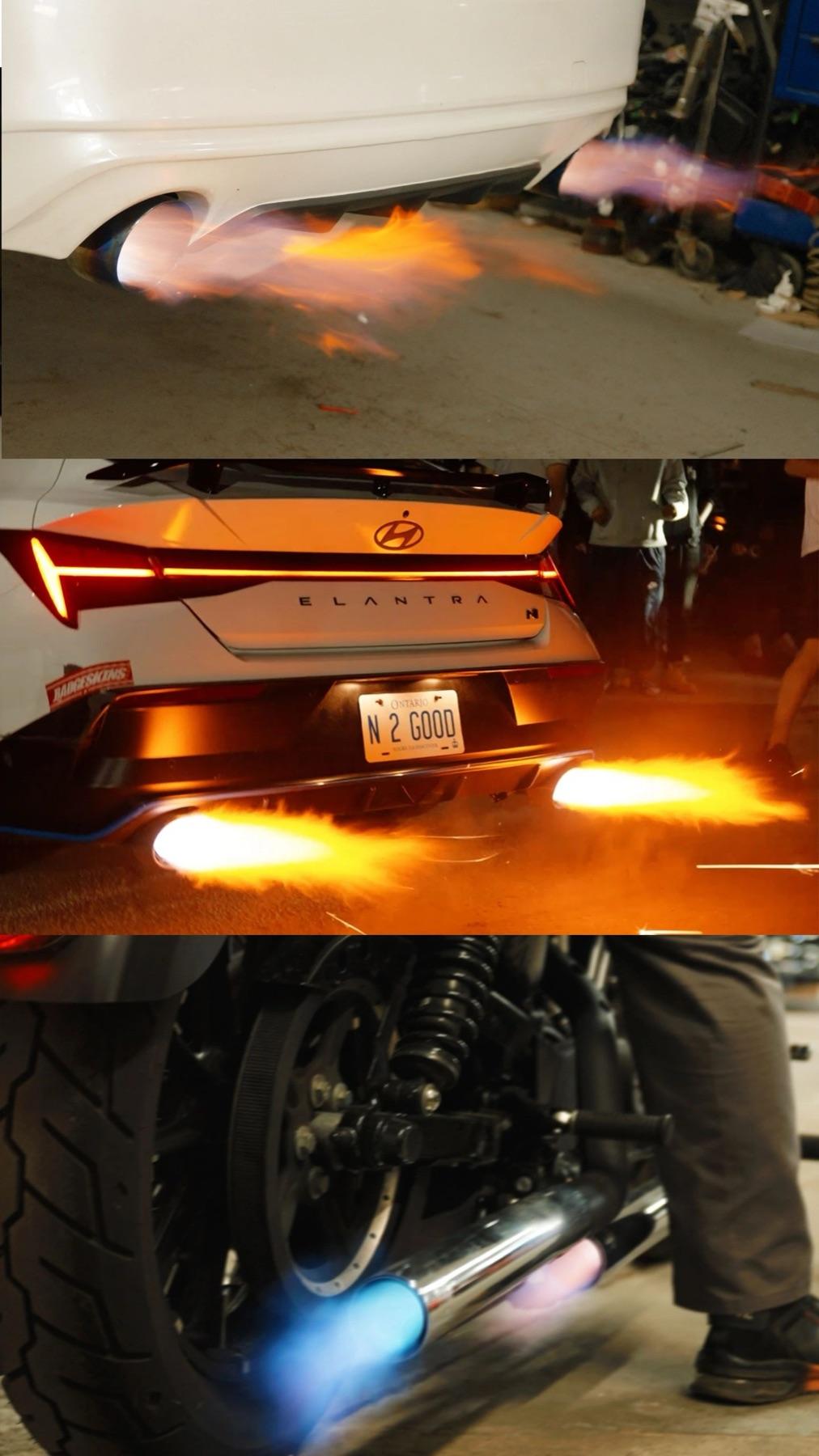
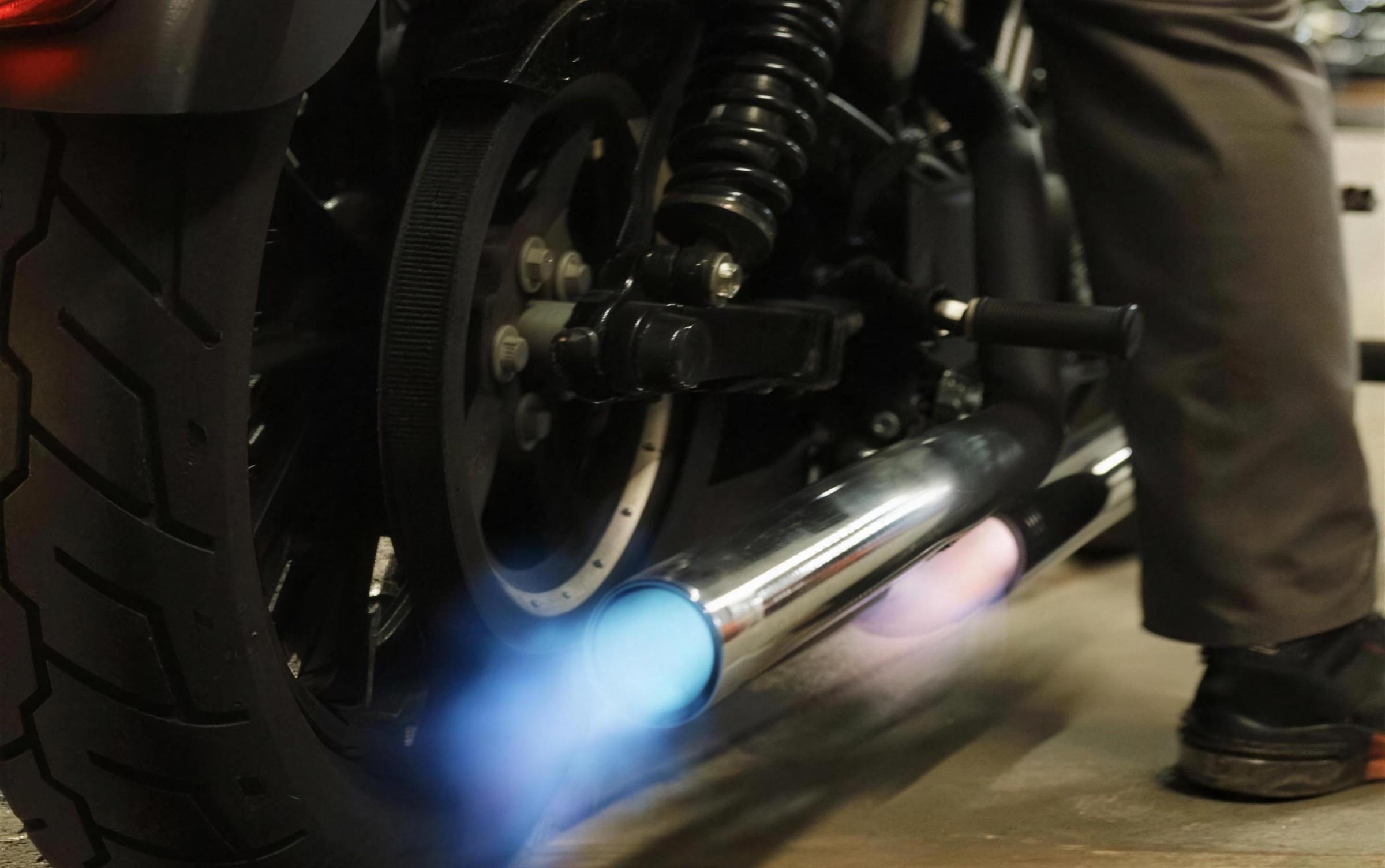
Various flame kit successes we've had: a 2018 Q50, a 2024 Elantra N and a 2016 Iron 883 Harley-Davidson.
The flame kit: an interesting predicament
A flame kit may not add much performance, but does it look cool. It isn't entirely without benefits either: installing one needs supporting mods that help performance, specifically a high-flow exhaust and, in most cases, a tune so the car doesn't panic when the afterburners kick in.
The difficulty is that every car is different and there's no single sure-fire way to get sustained flames. That's one reason VYPR is among the few companies still offering these kits.
How it works
Contrary to popular belief, these kits don't run open fuel lines into the exhaust. There are kits that do that, and yes, we supply them, but they're a different package we call the Dragon's Breath kit, and they make even bigger flames.
When you see a car shooting flames or making pops and bangs, it's usually down to the engine's tune: unburnt fuel from an aggressive tune ignites in the exhaust. It's random, because flames aren't the point of a performance tune, just a happy side effect.
Our flame kit uses the same idea on purpose. Without giving away all the details, it interrupts the spark to the engine, so fuel that should burn in the cylinder flows into the exhaust instead, and an igniter near the end of the exhaust lights it.
That's why a high-flow exhaust is essential: without one, fuel can pool and the result is unpredictable and risky. And every flame kit needs a custom Stage 2 tune, to suit the high-flow exhaust, to add power and to manage how the car reacts to the bursts of fire.
What we've learned
Big engines reliably make flames, turbocharged engines shoot extremely large ones, BMWs are a real pain, Mercedes are a mystery we're still unravelling, and smaller engines are an ongoing project. We recently figured out consistent flames on the Mopar 3.6, while V8 Mopars are a no-brainer. Whenever we crack a new or difficult car, you'll read about it here.